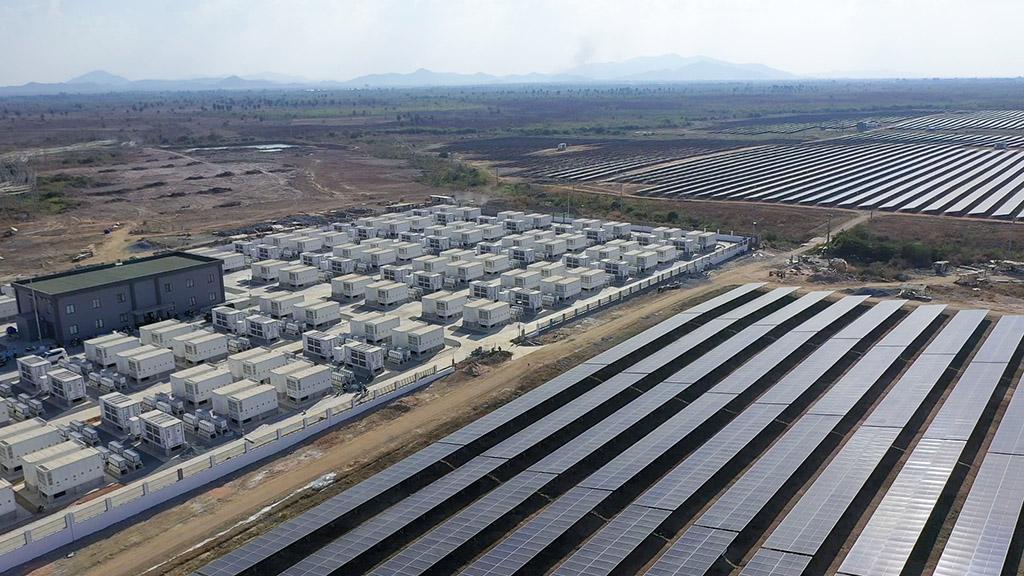
Cambodia: Utility-Scale Battery Energy Storage Project
Strengthens Cambodia’s power system resilience and reliability, enables greater renewable energy integration, and supports regional power trade through the ASEAN Power Grid.
Sectors
EnergyCountry
CambodiaPartners
Green Climate FundUK Foreign, Commonwealth & Development Office
Approval
Financing
Total Project Cost
$63.44 million
ADB Financing
$45 million
Includes $40 million concessional loan and $5 million grant financing from the Asian Development Fund
GCF Financing
$12.44 million
UK Cofinancing
$6 million
ISSUE
Cambodia continues to rely heavily on imported fuels for electricity generation and on electricity imports from Viet Nam to support supply security and grid stability. At the same time, the rapid expansion of domestic renewable energy is creating new challenges for the country’s transmission system.
The growth of solar and other energy sources is contributing to grid congestion, supply-and-demand imbalances, frequency deviations, and voltage fluctuations. Limited transmission capacity and system flexibility, particularly in central and southern Cambodia, constrain the grid’s ability to securely integrate additional renewable energy capacity and increase the risk of supply interruptions and higher system costs.
SOLUTION
Install a utility-scale battery energy storage system to improve grid flexibility, reliability, and renewable energy integration.
The project will finance a 250-megawatt/500-megawatt-hour battery energy storage system at the Takeo substation. It will store excess renewable energy during the day and dispatch it back to the grid to manage peak loads in the evenings, stabilize fluctuations, and provide emergency power during grid or supply interruptions. It will support Cambodia’s target to achieve 70% renewable energy capacity by 2030, strengthen cross-border electricity trade with Viet Nam, improve the capacity of Electricité du Cambodge for managing such systems, support the development of battery energy storage regulations, and promote skills development and greater participation of women in technical and leadership roles.
How did ACGF help?
ACGF helped mobilize $18.44 million in cofinancing from the Green Climate Fund (GCF) and the United Kingdom, complementing a $40 million concessional loan from ADB and a $5 million grant from the Asian Development Fund. It also supported project preparation, including feasibility studies focused on climate finance and private sector mobilization. The financing will support Cambodia’s investment in utility-scale battery storage to strengthen grid stability and energy security, facilitate greater renewable energy integration, reduce greenhouse gas emissions, and bolster cross-border power trade while contributing to the ASEAN Power Grid. Throughout implementation, GCF’s technical assistance will help measure and verify the project's greenhouse gas emissions reductions, ensuring its climate impact is tracked over time.
 Project Data Sheet