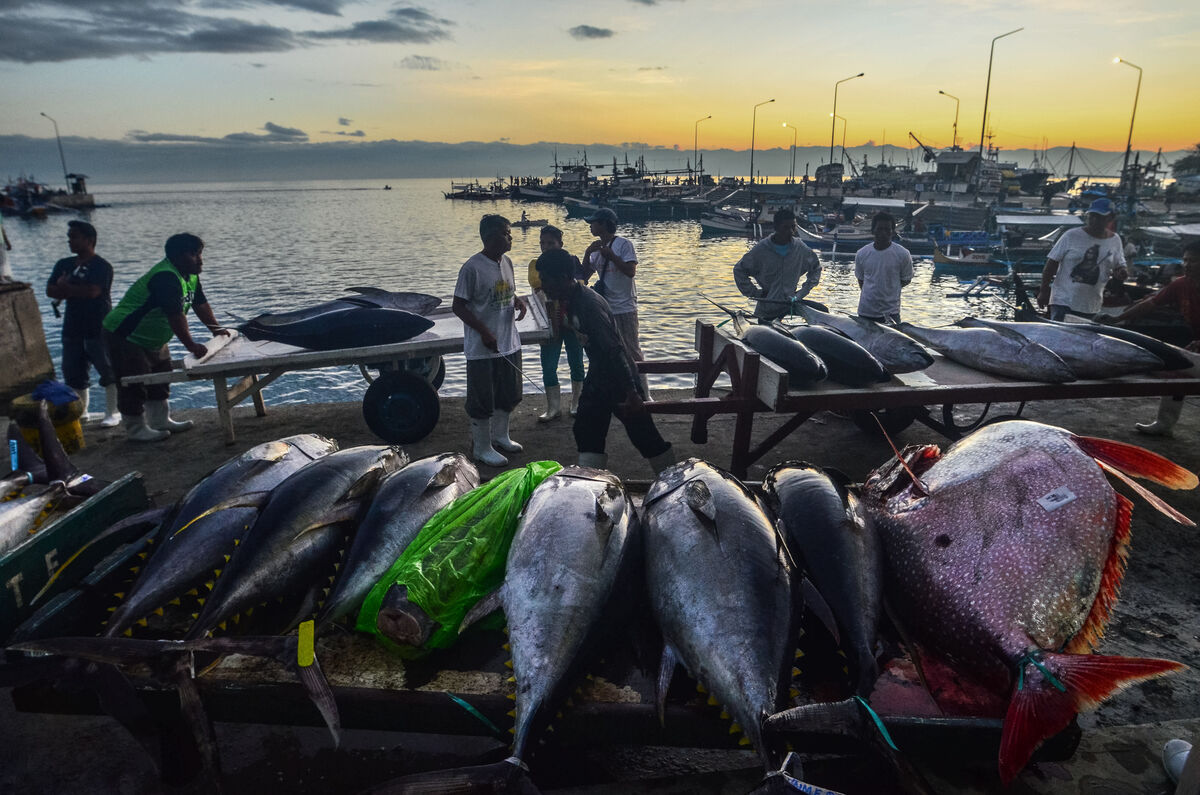
Stronger governance, credible certification, and inclusive port development can sustain coastal livelihoods and strengthen seafood supply chains across Southeast Asia.
Fisheries and small-scale ports are the backbone of coastal economies across Southeast Asia, supporting millions of livelihoods, contributing significantly to regional food security, and connecting fishing communities to domestic and international seafood and other primary commodity markets. While often smaller in scale than major commercial ports, their social and economic importance is profound, particularly in archipelagic and developing states where local harbors serve as essential gateways for coastal communities.
Yet these ports are increasingly operating in a complex and shifting landscape. Climate change, ecosystem pressures, and growing market expectations around traceability, responsible sourcing, and credible sustainability standards are reshaping the conditions under which small-scale fisheries operate. International seafood markets are demanding greater transparency, and coastal ecosystems that support fisheries, from mangroves and reefs to nearshore habitats, face mounting pressures from both climate impacts and coastal development.
The fifth webinar in ADB’s Green and Resilient Ports series brought together leading voices in fisheries governance, certification, and sustainable seafood markets. It explored how stronger governance, responsible fisheries management, and certification systems can support both livelihoods and continued access to global seafood markets, while helping protect the coastal ecosystems that fisheries depend on.
Building Trust Through Science-Based Certification
Anne Gabriel, Program Director for the Marine Stewardship Council (MSC) for Oceania and Singapore, opened the session by framing trust as one of the most valuable currencies in the global seafood economy. As supply chains become more complex and globalized, the focus is shifting from what seafood is sourced to how we know it is verified as responsible, traceable, and credible.
Anne highlighted that globally, around 38% of fish stocks are being overfished, reflecting significant and ongoing pressure on marine ecosystems. However, there are signs of progress. About 62% of stocks are still fished at biologically sustained levels, and nearly 77% of global seafood landings come from these stocks. Progress is being made, but not fast enough or consistently across all regions and fisheries. The MSC was established nearly 30 years ago in response to growing concerns around overfishing and the health of our oceans. Built on the principle that science-based standards and independent certification can drive real change, the MSC uses the power of markets to recognize and reward sustainable fisheries. Today, the program operates across more than 60 countries, with over 50,000 certified sites and more than 21,000 labelled products.
Drawing on consumer research from across Asia-Pacific, Anne highlighted rising concern for ocean health, with more consumers ranking the decline in fish populations among the top environmental issues. Across the region, two-thirds of consumers believe that choosing sustainable seafood is necessary to protect oceans and that their individual choices can make a difference.
Small-Scale Ports as Social, Economic, and Governance Nodes
Francisco Blaha, a globally recognized independent fisheries adviser with experience spanning more than 55 countries, shifted the focus to the people who catch the fish and the ports that serve as the center of their communities. Francisco emphasized that small-scale fishing ports are fundamentally different from commercial ports. They are not just infrastructure; they function as the village square, where social ties, economic activity, and governance converge. Drawing on first-hand experience across Indonesia, Viet Nam, and the Pacific Islands, Francisco outlined the structural challenges facing small-scale fisheries: fragmented governance, informality in landings and reporting, weak enforcement capacity that is often culturally complex, and compliance initiatives that are frequently donor-driven rather than locally embedded. He stressed that traceability reform must start with the smallest actors, noting that solutions designed for industrial-scale fisheries often fail when applied to small-scale contexts.
The environmental pressures on small-scale ports are equally significant. Waste and plastic leakage into coastal ecosystems, fuel handling and oil spill risks from ports that began as informal landing sites, and sewage contamination all pose serious food safety risks that can ultimately threaten market access. Climate-driven infrastructure vulnerability compounds these challenges, as infrastructure built decades ago is no longer fit for purpose in the face of sea-level rise and intensifying storm surges.
Francisco’s key message to policymakers was both clear and compelling: compliance cannot be imposed; it must be co-designed. Small-scale fishers need institutional support, not penalties. Ports must be understood as social and governance nodes, not just infrastructure. Investment must be proactive and risk-informed, not reactive. And digital tools need to be adapted to the realities of small-scale fleets rather than borrowed from industrial settings.
Driving Measurable Improvement Through Certification Pathways
Matt Watson, MSC’s Senior Fisheries Program Manager for Asia-Pacific, brought the session full circle by demonstrating how the MSC’s fisheries standard translates principles into practice. Matt reinforced the social significance of wild-catch fisheries, noting that 39 million people are directly employed in the sector and that seafood contributes to the food security of at least 3.3 billion people who rely on it as their main source of animal protein. The global seafood supply chain is valued at over US$400 billion annually, with an estimated 5–10% connected to illegal, unreported, and unregulated (IUU) fishing, a significant ESG risk often linked to forced labor and child labor practices.
Matt explained that the MSC’s fisheries standard assesses performance across three core principles: sustainable fish stocks, minimized ecosystem impacts including bycatch and habitat protection, and effective management systems that are both fair and forward-looking.
Critically, Matt highlighted that MSC is not a set-and-forget exercise. The program creates a cyclical model of continual improvement, with good information underpinning informed management decisions and, in turn, better outcomes. This adaptive approach is particularly relevant for fisheries in the Asia-Pacific, where environmental variability, climate pressures, and evolving market demands require management systems that can respond and adjust over time.
For fisheries that are not yet ready for full certification, the MSC offers a structured pathway of engagement and improvement. Tools, capacity building, and funding through mechanisms such as the Ocean Stewardship Fund support fisheries on their journey towards best practice. In the Asia-Pacific, the MSC works closely with governments, nongovernment organizations, retailers, and fishing communities to encourage this gradual but meaningful change. Over 55% of tuna globally has now achieved MSC certification, demonstrating the scalability of the model across diverse fishery types and economies.
The measurable benefits of certification extend beyond environmental outcomes. A literature review highlighted improvements across four dimensions: environmental impacts including healthier stocks and ecosystems; economic benefits with evidence of price premiums of up to 25% in some fisheries; governance improvements through strengthened relationships with management authorities; and social benefits including enhanced social capital and community relationships. Increasingly, however, market access itself, rather than price premiums, is becoming the primary driver of engagement in the MSC program.
Looking Ahead: Ports as Enablers of Sustainable Fisheries
What emerges from this webinar is a clear and shared understanding that small-scale fishing ports sit at the intersection of livelihoods, governance, environmental sustainability, and market access. They are not peripheral to the sustainability challenge; they are at its core. Strengthening these ports requires an integrated approach that addresses infrastructure, governance, social inclusion, and supply chain transparency simultaneously. The session also surfaced important questions about the relationship between small-scale and commercial ports. As Francisco noted, the two rarely function well together due to differences in safety requirements, logistics, and the fundamentally social character of fishing port communities. Many small-scale fishing ports across Southeast Asia were built decades ago and now require refitting and redesign to reflect contemporary considerations around food safety, climate resilience, traceability, and community wellbeing.
The momentum generated through ADB’s Green and Resilient Ports Initiative offers a meaningful opportunity to connect global best practice in fisheries management and certification with the practical realities of Southeast Asia’s diverse and vital small-scale port systems.
Sustainable fisheries begin at the port, where governance, livelihoods, and market expectations converge. By investing in inclusive governance, credible certification, and climate-resilient infrastructure, Southeast Asia’s small-scale ports can become catalysts for responsible seafood supply chains, ensuring that communities dependent on fisheries are not left behind in an increasingly demanding global market. As this webinar series continues, the focus will shift to bulk cargo handling and its role in the green port transition.