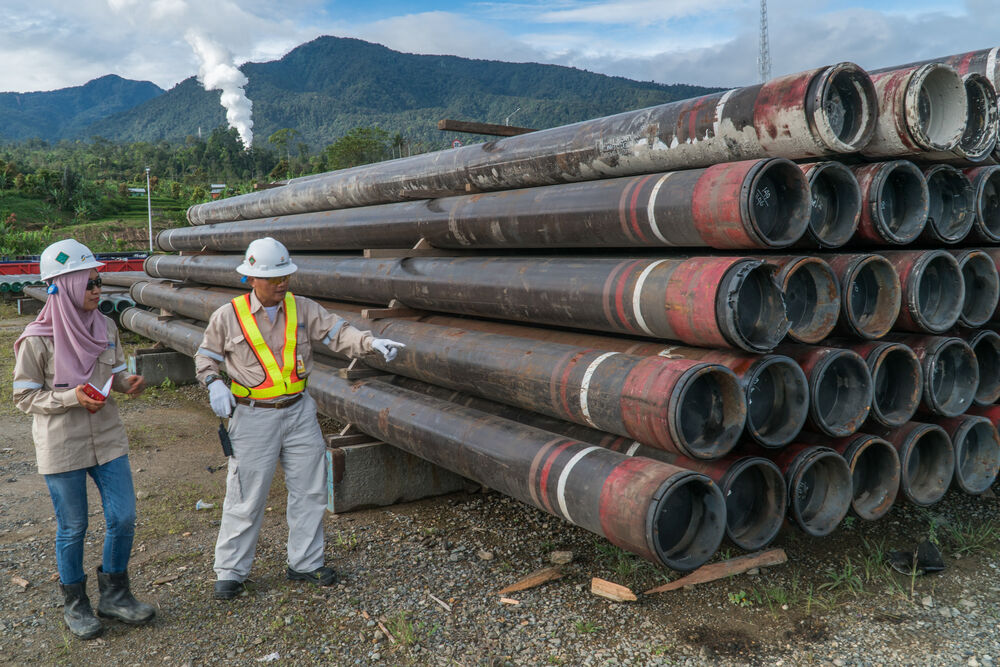
The Muara Laboh geothermal project site in West Sumatra, Indonesia, operated by PT Supreme Energy Muara Laboh. Credit: 2017 Gerhard Joren/ADB.
Southeast Asia is undergoing a period of significant transformation. Rapid urbanization, a young, dynamic, and digitally enabled population, and the green energy transition are creating new growth opportunities. Realizing this potential, however, will require substantial investment. Climate resilience is a key enabler of this economic growth, with up to 35% of the ASEAN region’s GDP growth at risk by 2050 if adequate investments are not made.
ASEAN is estimated to require up to $210 billion annually in infrastructure investment to meet its development goals and support climate resilience. Sovereign budgets and traditional donor support alone cannot close this gap. Mobilizing private capital at scale will therefore be essential to sustain growth and strengthen regional resilience.
Recognizing this, the Asian Development Bank (ADB) has positioned private sector development as a core priority under Strategy 2030, with a target to mobilize $13 billion in private investment annually by 2030, including $4.5 billion in direct private capital mobilization.
The central challenge is not a shortage of capital. Rather, it is ensuring the right combination of policy support, project preparation, and risk mitigation to enable private investment to flow into the sectors and markets where it is most needed.
These issues were the focus of the webinar “Scaling What Works: Private Sector Development as a Catalyst for Growth in Southeast Asia,” organized by the ASEAN Catalytic Green Finance Facility (ACGF) under the ASEAN Infrastructure Fund (AIF). Speakers shared practical approaches to mobilizing private investment across the region, with a particular focus on business models that can be scaled and replicated.
What It Takes to Mobilize Private Capital
Speakers emphasized that mobilizing private investment is rarely about creating new financial instruments. In many cases, the tools already exist. The challenge lies in sequencing them effectively so that investment can move from concept to implementation.
Across sectors and markets, three priorities consistently emerged.
1. Strengthen the enabling environment.
Private investors rely on predictable policies, transparent rules, and fair competition. Without these fundamentals, even well-prepared projects struggle to attract long-term financing.
2. Build a pipeline of bankable projects.
In many cases, the constraint is not the availability of capital but the readiness of projects. Weak preparation, unclear revenue models, and limited institutional capacity often prevent viable initiatives from reaching the investment stage.
3. Address risks that markets cannot absorb alone.
In frontier economies or emerging sectors such as clean energy and inclusive finance, risk-sharing mechanisms can help move projects from marginal to viable. Instruments such as blended finance, guarantees, and technical assistance can play a catalytic role when deployed strategically.
Together, these elements create the conditions for private capital to participate alongside public investment and development finance. The panel discussed several examples from ADB’s own operations.
Catalyzing Innovation in Frontier Markets
The webinar examined the challenge of financing early-stage businesses in frontier markets such as Cambodia and Lao PDR. These companies often drive productivity, create jobs, and introduce new industries. Yet many fall outside traditional financing models. Young enterprises may lack collateral, long operating histories, or the scale required by traditional lenders and investors. As a result, promising ventures often struggle to access the capital needed to grow.
ADB’s Frontier SME Finance approach seeks to address this gap by supporting first movers that introduce new business models or modernize sectors. Rather than relying on conventional debt or equity, the platform tests financing structures that better match the realities of frontier markets.
One approach discussed during the webinar was revenue-based financing, which aligns repayments with cash flows and reduces reliance on collateral. This enables SMEs with seasonal or uneven cash flows to access capital without rigid repayment obligations.
Beyond supporting individual enterprises, these pilots aim to demonstrate viable investment models. By strengthening governance, improving financial systems, and proving commercial potential, early investments can help attract local investors and financial institutions to scale similar opportunities.
Expanding Finance for Women Entrepreneurs
Speakers also discussed efforts to expand access to finance for women-led businesses (WSMEs) in Viet Nam. Globally, women entrepreneurs face an estimated $1.7 trillion financing gap, including $6 billion in Viet Nam.
When ADB began working with financial institutions in Viet Nam to expand lending to women entrepreneurs, one of the key findings was that many banks were reluctant to lend to this segment. Assessments identified barriers including social norms, limited business networks, lack of tailored financial products, and collateral requirements that many women entrepreneurs could not meet.
Through the Women Entrepreneurs Finance Initiative (We Fi), ADB worked with partner banks to address these challenges. Financing was paired with incentives and technical support that encouraged banks to develop products tailored for women-led businesses and strengthen internal systems for tracking gender lending.
Participating banks introduced sex-disaggregated data systems, developed financial products for women entrepreneurs, and expanded advisory services and training.
ADB has built a robust programmatic approach to WSME financing in Viet Nam. Over the past five years, it has supported four financial intermediation transactions with Vietnamese financial institutions, mobilizing more than $880 million in financing for in SME financing—including $175 million for women-owned SMEs (WSMEs)— and reaching over 45,000 WSMEs. The experience illustrates how targeted incentives and institutional reforms can expand access to finance while encouraging private lenders to view women entrepreneurs as a viable and growing market.
Mobilizing Investment Through Blended Finance
Blended finance was another theme discussed during the webinar. In sectors where risks remain high or markets are still developing, carefully structured concessional capital can help unlock commercial capital.
One example shared was the Muara Laboh Geothermal Project in Indonesia. Geothermal development involves high upfront costs and resource risks that can deter private lenders. In this case, ADB structured a $92.6 million financing package combining concessional and commercial funding to improve project bankability. The project mobilized significant private investment while supporting Indonesia’s clean energy targets. The project is expected to avoid an estimated 400,000 tons of CO₂ emissions annually, demonstrating how blended finance can support both development and climate objectives.
The case study illustrates how strategically deployed concessional capital can help shift risk perceptions and crowd in private investment. ACGF applies this same approach to mobilize climate-aligned investment across Southeast Asia.
Policy as a Catalyst for Scale
Financial innovation alone cannot deliver scale without supportive public policy. Experience from Viet Nam highlights how governments can enable private investment through the following:
- Clear and consistent policy signals recognizing the private sector as a driver of growth;
- Reduced administrative barriers and stronger protection of business rights;
- Investment in foundational assets such as digital infrastructure, clean energy, and human capital; and
- Regulatory sandboxes and public procurement to support early adoption of new technologies.
Together, these measures help translate pilot successes into broader market impact.
Scaling What Works
Mobilizing private investment at scale depends on ecosystems that combine supportive policy, well prepared investment opportunities, and financing structures that help address market risks. Across Southeast Asia, many of these elements are already in place. The priority now is to scale approaches that have already demonstrated results.