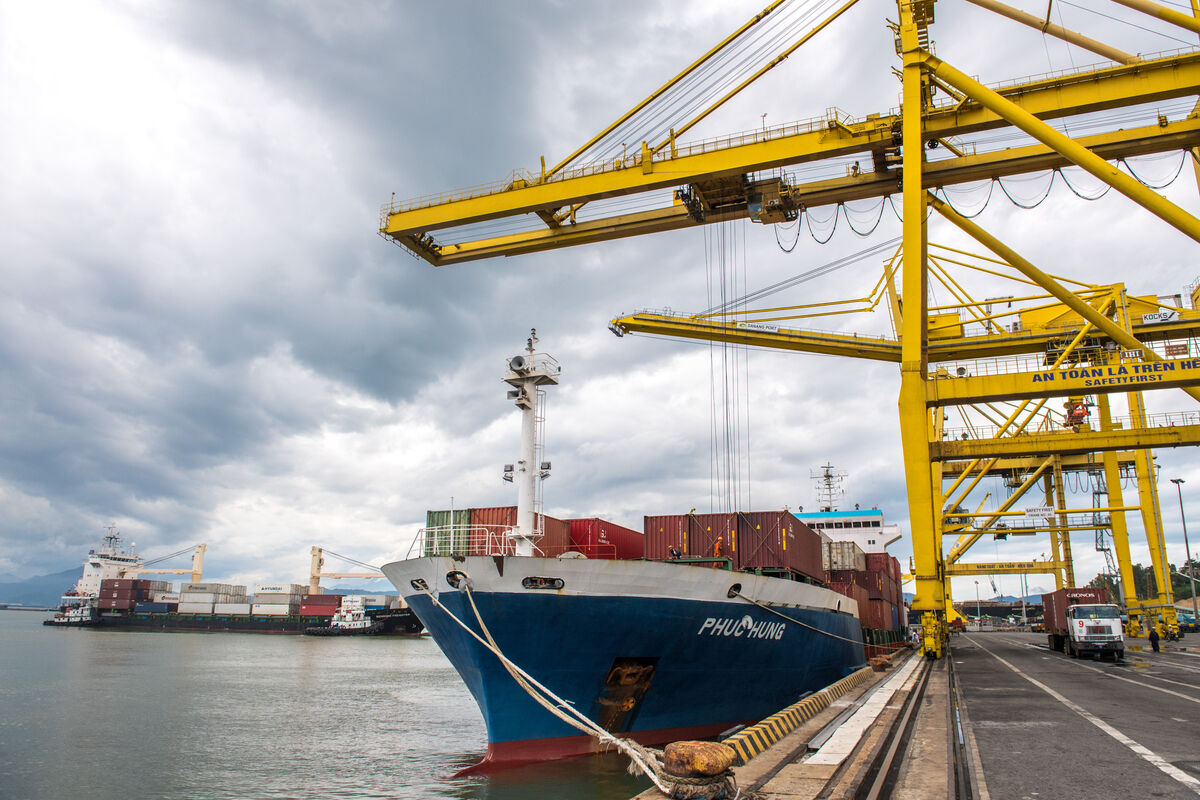
Exploring practical pathways and technologies shaping Southeast Asia’s green and resilient ports.
Ports remain the lifelines of global trade, moving around 80% of goods worldwide. Yet, they are also significant contributors to greenhouse gas emissions and face mounting pressure from climate risks, regulatory complexity, and growing stakeholder expectations. The urgency to decarbonize is clear, but it also presents an opportunity to transform ports into hubs of innovation, efficiency, and resilience.
In the second webinar of ADB’s Green and Resilient Ports series, experts shared practical strategies and real-world examples for shaping low-carbon futures for Southeast Asia’s ports. The discussion spanned systemic inefficiencies in global shipping, digital optimization, and operational innovation, highlighting how collaboration and technology can accelerate measurable progress.
One of the most striking insights came from Haris Zografakis, founder of the Blue Visby Consortium. His presentation addressed a long-standing operational practice in global shipping. Ships often sail at high speeds only to wait at anchorage, a behavior responsible for up to 20% of shipping’s carbon footprint.
The Blue Visby Solution aims to optimize ocean passage without interfering with berthing schedules and has been validated through multiple studies, demonstrating emissions reductions of up to 15%. Importantly, this approach requires no capital expenditure, making it both accessible and scalable. Beyond carbon savings, the solution delivers co-benefits, including reduced underwater noise, lower whale strike risks, and improved local air quality.
By focusing on the voyage rather than the port interface, Blue Visby demonstrates how systemic inefficiencies can be addressed without compromising resilience, a critical consideration for ports worldwide.
Technology is reshaping port operations. Brendan Curtis, Chief Commercial Officer at OMC International, showcased how digital tools can unlock both safety and sustainability gains. The Dynamic Under Keel Clearance (DUKC) system uses real-time data, AI-enhanced forecasts, and hydrodynamic modelling to optimize vessel transits.
The results are compelling. At Port Botany in Australia, the implementation of DUKC enabled record-breaking drafts and increased sailing windows, reducing delays and improving throughput. These operational gains translated into emissions reductions of 6% to 7% per voyage, alongside significant cost savings.
Additional benefits include reduced dredging volumes. A case study from New Zealand demonstrated reductions of up to 40%, minimizing environmental impacts while lowering costs.
Digital optimization is no longer a future concept. It is a proven pathway to greater efficiency, safety, and resilience.
Decarbonization is not limited to large ports. Smaller operators can also lead with scalable solutions, as demonstrated by Lauren Lambert, Environmental and Sustainability Business Partner at NRMA’s Manly Fast Ferry.
Operating high-speed, high-frequency services across Sydney Harbour, the ferry faces unique challenges in reducing emissions. With hydrogen retrofits not yet feasible, the team focused on efficiency-driven innovations, including:
- Autonomous hull-cleaning robots, improving fuel efficiency by 10%.
- Weight reduction strategies, targeting fuel savings by 3%.
- Smart routing technologies to optimize speed and engine loads.
- Propeller upgrades that have already delivered an 8% reduction in fuel consumption.
These initiatives highlight the importance of collaboration and persistence. Cleaner technologies often take time to mature, and upfront costs can be high. However, long-term operational, environmental, and financial benefits can outweigh initial investment challenges.
Decarbonizing ports is complex, but achievable. The technologies and strategies showcased in this webinar demonstrate that innovation, when paired with collaboration, can deliver measurable progress. Southeast Asia’s ports have an opportunity to leapfrog incremental change by adopting proven solutions and learning from global best practices.
Decarbonizing ports is a long-term transformation that requires sustained action. Aligning infrastructure planning, governance, and financing with climate goals enables ports to move from ambition to implementation and support the region’s low-carbon transition.
Sign up to ADB’s next Green Ports Webinar