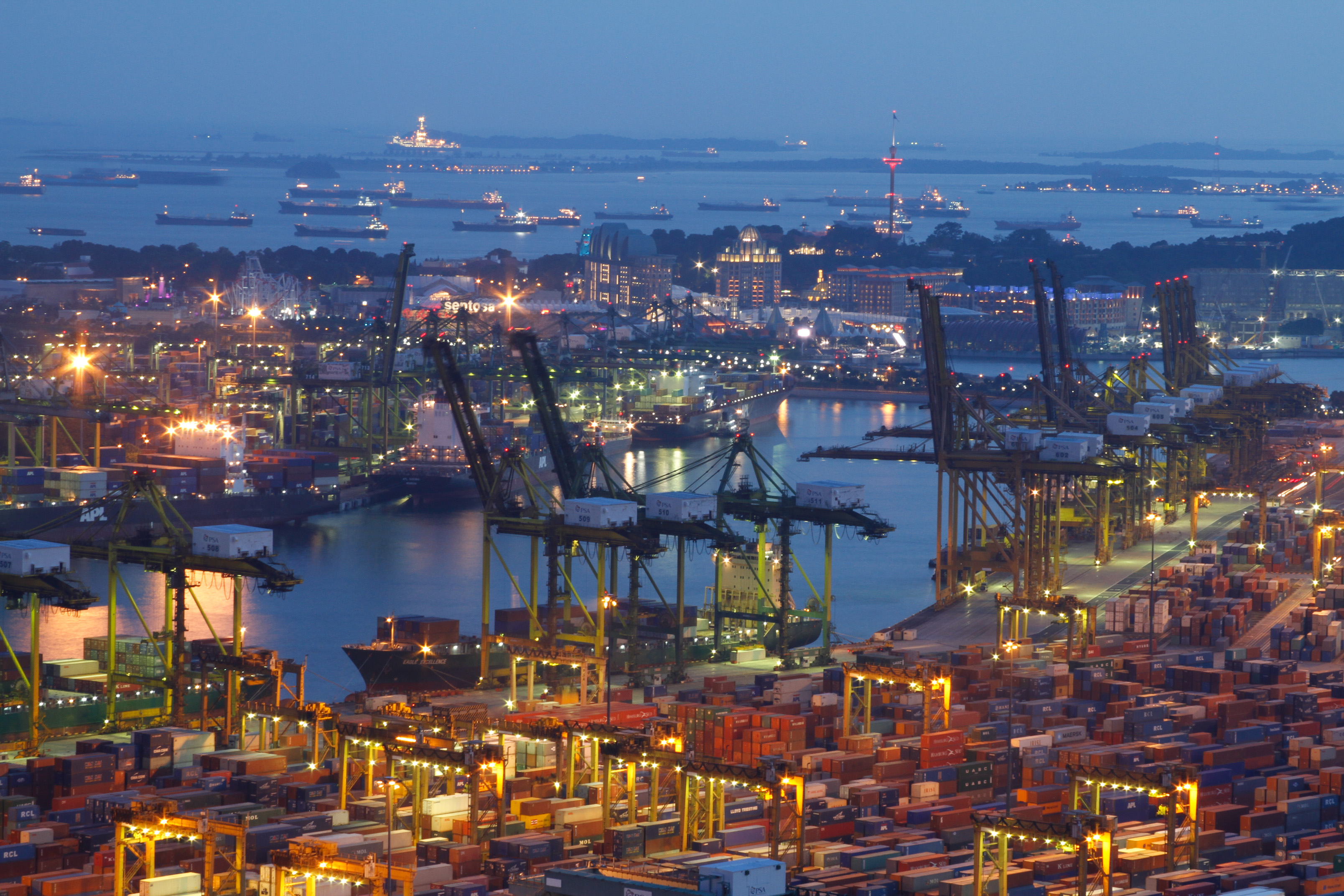
As trade volumes grow and supply chains become more complex, automation is becoming an increasingly important tool for ports seeking to improve efficiency, strengthen safety, and build resilience without losing sight of practical business needs.
Across Southeast Asia, ports face growing demands for higher throughput, faster vessel turnaround, improved safety performance, and stronger resilience against disruptions. The tenth session of the Green Port Webinar Series, Automation for Operational Efficiency and Safety, brought together industry leaders to examine how ports can use automation to respond to these pressures and what is needed to translate new technologies into practical operational gains.
Automation is No Longer a Future Concept
Kelvin Zhou of Zelos Technology opened the discussion by examining how advances in autonomous vehicle technology are transforming logistics and port operations. Autonomous and electric vehicles can reduce operating costs, lower emissions, improve equipment utilization, and minimize worker exposure to hazardous environments. Advances in artificial intelligence are also reducing reliance on costly supporting infrastructure, making automation increasingly accessible beyond the world's largest ports.
But greater accessibility does not mean automation should be adopted for its own sake. Kelvin emphasized that successful deployment starts with identifying a clear operational need and ensuring that technology improves, rather than complicates, existing performance. Safety improvements may emerge first, with productivity gains following as systems collect more operational data and machine learning capabilities mature.
As hardware costs decline and technologies become more scalable and adaptable, automation is also becoming increasingly viable in developing markets. This creates new opportunities for ports to adopt technologies progressively and in line with their operational priorities and investment capacity.
Building the Data Backbone
If autonomous equipment represents the visual side of automation, the systems connecting and informing that equipment are equally important.
Oscar Pernia of Nexport.ai highlighted data interoperability as a foundation for successful automation. As ports deploy more digital systems, sensors, and operational technologies, the ability of these systems to exchange and use information becomes increasingly critical.
Ports are developing complex digital ecosystems that can include terminal operating systems, equipment control systems, maintenance platforms, and Internet-of-Things devices. Without a common data language and seamless information exchange, automation cannot deliver its full value. Oscar stressed the need for a robust "data backbone" that allows systems to communicate, share information in real time, and support operational decision-making and future artificial intelligence applications.
The discussion also highlighted industry initiatives such as TIC 4.0, which promote greater standardization and interoperability. Common approaches can help reduce implementation risks, improve time-to-value, and make automation more accessible to ports of all sizes. The broader takeaway was clear: the value of automation depends on a strong data foundation with information that is connected, standardized, and trusted.
Start with the Problem, Not the Technology
Marielle Lamar of ICTSI's Manila International Container Terminal demonstrated how data-driven analysis can reveal inefficiencies and guide investment decisions.
Drawing on a real-world case study, Marielle described how analysis of refueling operations identified recurring inefficiencies, including unnecessary refueling trips and lost productive time. By rethinking existing processes and implementing improvements in phases, the terminal identified opportunities to recover approximately 195 operational hours per month, equivalent to around 5,000 additional container moves monthly and nearly 100,000 twenty-foot equivalent units annually.
The case reinforced a simple principle: automation should be implemented for a clear operational purpose. Ports can begin by understanding their challenges, measuring performance, identifying bottlenecks, and then determining which interventions or technologies can deliver the greatest value.
The Human Side of Automation
A recurring theme throughout the webinar was that technology alone is not enough. Workforce transition, leadership, and change management remain central to successful implementation.
The panel noted that automation is likely to transform jobs rather than simply replace them. New technologies can create demand for new skills in operations, analytics, maintenance, and systems management. Realizing these opportunities requires investment in training and reskilling, as well as an organizational culture that supports adaptation and continuous improvement.
Collaboration is equally important. Operators, technology providers, regulators, and other stakeholders need to work together on standards, regulatory frameworks, and implementation approaches that reflect the realities of individual ports. Automation strategies need to respond to local operating conditions, infrastructure, workforce capabilities, and investment constraints rather than rely on one-size-fits-all solutions.
Looking Ahead
For Southeast Asian ports, the opportunity is therefore broader than the adoption of increasingly sophisticated technology. Well-planned automation can contribute to safer workplaces, more informed decision-making, more efficient use of existing assets, and stronger operational resilience. A purposeful approach to automation can help ensure that technology translates into measurable improvements in port performance.